Perspectives from UTMB: soul, scale and the future of trail running’s biggest week
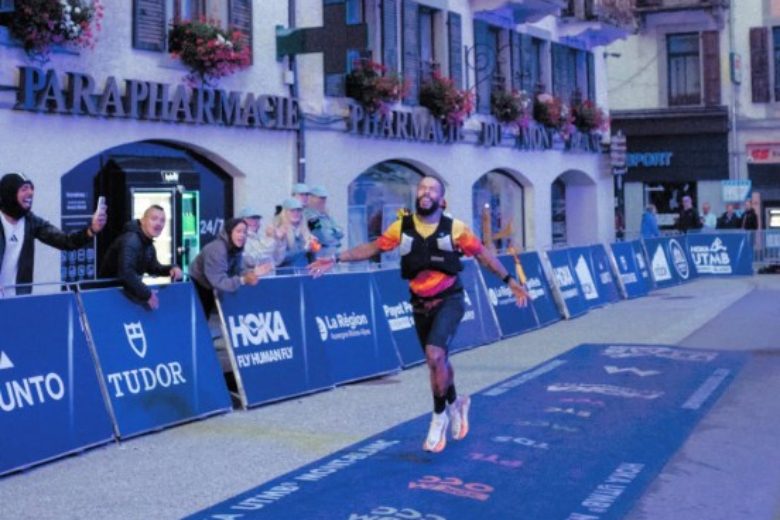
Nearly 25 years ago, a couple from Chamonix with a passion for running and a desire to revive an old relay route around Mont Blanc started something they couldn’t have imagined growing this big. In 2003, 700 runners took to the trails. In 2026, UTMB Finals Week drew nearly 11,000 competitors across eight races, an estimated 50,000 supporters, and 147 brand activations, all descending on one Alpine valley for a week.
The growth is extraordinary. So is the debate it has sparked.
Is UTMB still a running race, or has it become something else entirely? We wanted to find out. So we spoke to four people who were in Chamonix this August, each there for entirely different reasons: Rebecca Brennan, who spends every August in Chamonix and has been known to leave town during UTMB week to escape it; Alex Sawbridge, Senior Partnerships Director at Threshold Sports, who attended in a professional capacity as one of the UK’s leading race organisers; Lewis Bloyce, who raced the CCC and works as a cultural connector for HOKA; and myself - there as part of the Aspire team, supporting client activations and getting under the skin of the brand landscape. We also spoke to Lory Louves, Aspire’s Cultural Insights and Strategy Manager, about what he observed across the week. We asked everyone to be honest about what they saw.
The scale of it
What strikes almost everyone who attends is not just how big UTMB is, but how completely it takes over. Alex Sawbridge, Senior Partnerships Director at Threshold Sports, attended for the second time this year. “The town becomes the centre of the trail running world for a week,” he says, “attracting runners, brands, media and industry professionals from across the globe. Even after three days there, I left feeling as though there was still plenty I hadn’t seen.”
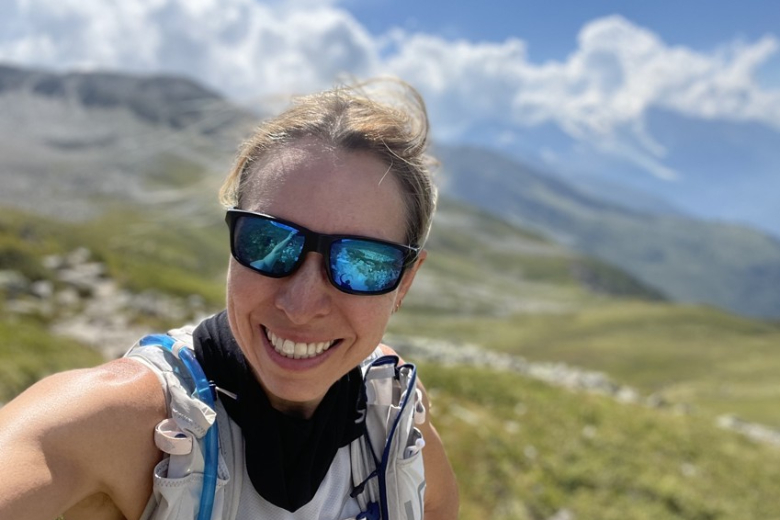
For me, the scale was offset by something I hadn’t anticipated. “I don’t think I had truly appreciated the beauty of Chamonix before going there for UTMB. I had thought about the busyness, the excitement of getting stuck into everything going on and the extraordinary racing, but I found myself during busy moments looking up and remembering our surroundings, and finding it quite unbelievable that we have the chance to come together in locations like this. I think this is maybe something that gets lost or taken for granted.”
Rebecca Brennan has spent August in Chamonix every year for the past five, and has been known to leave town during UTMB week to escape it. She’s been watching the race evolve since 2010. “What was a very grassroots thing has become such a commercial vehicle,” she says. “As a consumer, everywhere you go there’s something for you.”
The commercial question
Alongside the racing comes an entire ecosystem of brand activity. New regulations introduced by the Mayor of Chamonix pushed much of it outside the village this year, but that hasn’t made it smaller. Lory Louves, Aspire’s Cultural Insight and Strategy Manager, observed a telling shift: “You used to see so many community runs leaving from the village. Now it might be more performance-based: hilly relay races and Vertical Kilometre time trials, with barely any spectators, all turned into great online content signalling ‘you didn’t see us but we were there!’ If people don’t see you, you buy the space to be seen across social media.”
Lewis Bloyce raced the CCC this year and works as a cultural connector for HOKA. He understands both the sport and the commercial world around it. “The increase in footfall, the commercial opportunity for retailers, and its somewhat circus-like feeling, it’s everything I expected and more,” he says. “I’ve worked in fashion for 13 years, I have been in and around some crazy stuff. And no matter what people think about UTMB today, it is an incredible week, but I recognise there being a need to refine, reconfigure and protect its true essence, respect nature, and look after Chamonix and beyond.”
The moments that stayed
For all the debate, the moments people carry home tend to cut through everything else. “The moment that stayed with me most was watching a man finish the TDS, having obviously injured his leg fairly close to the finish. He could barely walk, not able to bend his leg at all, and during the final stretch, going through the town, any spectators walking through wouldn’t overtake him. This resulted in a crowd of people trailing him, all cheering and clapping their way down the street, moving more people than just him to tears. For me, this was one of the moments during the week that really took me to the heart of why we are all there, escaping all of the brands and activations for a moment, and really taking in the athletes and appreciating what it is they are doing.”
Alex had his own. “The finish to the OCC Women’s race was one of the best things I’ve ever been lucky enough to see in sport. A 60km mountain race coming down to a sprint finish was incredible.”
For Lewis, it came mid-race, climbing a 7km ascent with more than 1,000 metres of elevation gain in the third quarter of the course. “I just realised then that I haven’t found the limit.”
Rebecca noticed something quieter: the weather at the start, and the teams carrying exhausted runners in wheelchairs. “A team event,” she says, “within a very non-team sport.”
%20(1).jpg)
Visibility, community and who gets to be seen
One of the most significant moments of UTMB week had nothing to do with brand activations or finish line drama. Sabrina Pace-Humphreys partnered with UTMB and Suunto to screen the Black Trail Runners film WE ARE HERE in Chamonix. Lory describes it as exactly what the week needed: “A wholesome moment for the global majority community to gather and meet around the same purpose. If only brands would include more diversity in the people they invite to their activations. If only we all cared more about what visibility really means.”
Still true to its roots?
This is probably the question that divides people most. Rebecca is direct: “I don’t think UTMB is still true to its roots in the way they have expanded into a global race series. Rather than expanding to keep the series about going around iconic mountains or hiking routes, they have picked famous races with high followings.”
Lewis is more cautious, and honest about his position. “I would say that I am not at liberty to answer that, but from what I know and have seen, there was a time where people just came to run.”
For Alex, the answer lies in what the event still does to people. “For all the growth and commercial interest surrounding the event, I think that ability to inspire ordinary runners to take on extraordinary challenges, something we set out to do at Threshold as well, is exactly what keeps UTMB connected to its roots.” He entered the Arc of Attrition 100 while he was there, the first step toward getting himself on a UTMB start line.
For me, it comes back to something simple. “UTMB is an example of what people are capable of when they truly challenge and dedicate themselves. I am not really in a position to know whether it is true to its roots, but I do think it is important that the purpose and passion behind this race isn’t lost.”
Maybe that’s the question worth sitting with, not just for UTMB, but for every event, brand and community that has grown up around it.
Words by Amy Taylor, Account Executive at Aspire.